Me On the Road

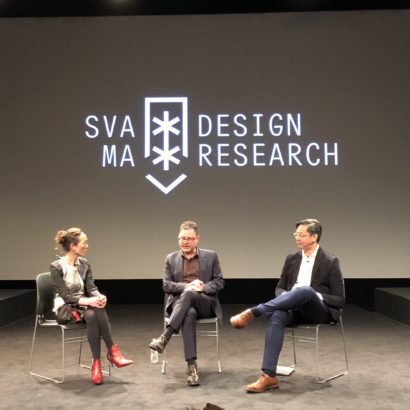
You’ve read my blog, now see the road show. In the coming days and weeks, I’ll be making a number of appearances, not just in New York, but all across the country: Austin, Minneapolis and San Francisco, too. Here’s a roundup of what’s happening.

Continue Reading

+

Bound for Anything

Ratings

3 of 5 stars
What’s this?

Little by little, we’re getting to the point where most consumer goods will be customizable. We have a long way to go, but the site Bound for Anything gets us a step closer: they let you customize your own journals and notebooks, meaning you can specify whether the pages are pre-printed with lines, grids, calendars, even storyboard boxes and simple games. Not only that, but you’re not limited to one type; the service lets mix and match as many sections as you like, so you can create a notebook that meets your specific criteria. My friend Jared, who first brought Bound for Anything to my attention, ordered one of these and said it was shipped to him in about a week. Find out more here.

+

The New New iPad

I didn’t talk about hardware at all in my iPad wish list from earlier in the week because none of my complaints about the iPad 2’s form factor seemed as pressing as the changes I’d like to see in the software. Now that the third iteration of the device is here (announced just today), with a high definition Retina Display, a much improved camera, and 4G LTE connectivity.

That’s all fine and good, and to be sure I will buy one if only out of professional duty. But there’s one major hardware change that I now realize that I do really long for: a reduced bezel.

Across all its models, the iPad bezel has had to strike a tricky balance between providing a grabbable area for the user’s hands, housing the innards of the device, and aesthetically framing the screen. The original iPad’s bezel was thick but excusable, as that version was something entirely new. Its successor was essentially unchanged, but Apple did a beautiful job reducing the depth of the device itself in that model.

Following that trend, I fully expected that in its third revision Apple’s designers would turn their attention to the bezel, minimizing it or at least reducing its width by twenty percent or so. Obviously that didn’t happen, probably due to the demands of the Retina Display and battery.

The reason I’m focused on this is that, to be frank, I find the iPad to be harder to hold than it should be. The screen size itself is great, but the added girth of the bezel always seems superfluous and even cumbersome when using the device on a crowded subway. I don’t want a smaller screen though; If I could keep the existing screen size but just pull in the overall width and height of the device by a few centimeters, it would be a meaningful improvement. Next model, I guess.

Continue Reading

+

iOS Wish List

By most accounts, it’s almost a sure bet that Apple is set to debut the third iteration of the iPad tomorrow. Presumably, there’s a new version of iOS in the works too, though if the past is any guide such a thing would probably not be announced at the same time. Still, software features are what I’m really interested in; a Retina display would be a nice addition on the hardware side, but most of the improvements I’d like to see in the iPad would be software-based — and I’m not talking about Siri. Here’s a wish list of what I’d like to see.

Continue Reading

+

The Case of the iPad Cases

With the next major revision to the iPad rumored to be announced as soon as next week, I figure I’d better get any iPad 2-specific posts I’ve had in the hopper posted quickly. In particular, I’ve been wanting to write about cases for a while, mostly because it took me nine or ten months to find a case combination that really works for me.

For a long time, I was very disappointed with the Apple Smart Cover, which to me is an example of a fantastic design on paper that in real life fell short of expectations. I always found it fell off its magnetic hinge too easily, and after toting my iPad to and from work for only a few months, its edges quickly became frayed.

But then I came across the iPad 2 Smart Feather from Incipio, a lightweight hardshell case that hugs the back of the iPad. A lot of cases do this, but this was the first I came across that also clasps around the Smart Cover’s hinge, securing it tightly.

Neither does it add much in the way of bulk to the device. So little, in fact, that when I recently bought a Logitech Zagg keyboard case, I was happy to discover that the Smart Feather fits comfortably in the Zagg’s slot. The Zagg is also designed to let you collapse the iPad on top of the keyboard for carrying them together, a configuration that still mostly works when you have the Smart Feather on the device. It’s not a perfect fit, but it does the job.

I’ve been using all three accessories — Smart Cover, Smart Feather case and Logitech Zagg keyboard — as I’ve been doing more and more of my ‘real work’ tasks on the iPad. Having a real keyboard is a huge help, and being able to carry the iPad anywhere without having to handle it too delicately has been a boon too. It all seems to be coming together… just in time for me to buy a new model.

Continue Reading

+

Integrity and “The Artist”

Shockingly, last night at the Oscars, Hollywood decided to award the Best Picture prize to a film that celebrates Hollywood. Michel Hazanavicius’s “The Artist,” a heartfelt ode to the silent film-era, is an undeniably charming picture even if it seems unable to resist nudging the audience to constantly wink along with its own cleverness. However, I can’t help but point out that as little more than a casual fan of silent movies, “The Artist” still seems like a pale imitation of the original. It is a tribute to silents in the same way that, say, “Happy Days” was a tribute to the 1950s.

Over at The New Yorker, film critic David Denby makes a great argument as to why the year’s “Best Picture” misses the mark for what it honors. Denby’s principal complaint is that the acting in “The Artist” captures very little of the quality of acting that the original silent movie stars employed to make those films come alive in the absence of sound. He writes, “Silent film is another country. They speak another language there — a language of gestures, stares, flapping mouths, halting or skittering walks, and sometimes movements and expressions of infinite intricacy and beauty.”

Denby believes these characteristics escape the two leads of Hazanavicius’ film: “both characters, and both actors, move in a straight line in each scene; they stay within a single mood. The great silent actors did so much more.” He elaborates: “In the silents, you have to do something; you can’t just be. Silent-film acting drew on the heroic and melodramatic traditions of nineteenth- and early-twentieth-century theatre… it drew as well on mime, magic shows, and vaudeville… Subtlety was not a high priority in those arts.” It was frequently not great acting, but it was always expressive.

I agree with this assessment, though in making his case Denby underrates my biggest complaint about the film: it just didn’t look like a true silent movie. Hazanavicius’ camera is surprisingly fluid in “The Artist.” It jumps back and forth, climbs high and dips low, draws in for surprisingly detailed closeups and pulls out with great agility for wide shots. To me, silents generally felt flatter, and not in a bad way. They made the most of the inflexibility of early camera equipment, using shots that seem static relative to today’s unimpeded camera technology, but they were very effectively contrasted with their stars’ outsized facial gestures, propeller-like limbs and ability to cut dynamic swaths across the screen. The camera could not be expressive, so the actors were. “The Artist” feels a lot more like a movie that might have come a few decades later, when camera equipment got lighter and more nimble; a movie from the 1940s or 1950s perhaps, except with the sound removed. This, for me, was its worst mistake: in a movie about movies, it could not convince me to suspend my disbelief.

Continue Reading

+

My Five Minutes on The Verge

Ratings

3 of 5 stars
What’s this?

This short interview with me was conducted by Verge editor Thomas Houston and published yesterday. It covers my thoughts on the Kindle Fire, how I use Pinterest, my favorite Mac of all time, and more. It was fun to do; my thanks to Thomas for thinking of me for this regular feature (past subjects include Robert Scoble, Jason Kottke, Sarah Lane and others). Read the complete interview here.

+