That’s the Last.fm Time

Last.fmI’d just like to know: how many of you out there have been burned — or, I guess, delighted — by recommendation engines? You know, when you buy one product, a mercenarily convenient notice will present itself with a recommendation for another similarly minded product that you might like to buy as well.

Amazon.com, of course, is the most famous online retailer who’s implemented this ‘upsell’ technique for just about anything they sell, but I’m specifically talking about recommendations for music. By and large, I’ve found the recommendations engine at Netflix to be very satisfactory, as there’s something more easily quantifiable about offering up movies than music, tastes for which can be so capriciously subjective.

By contrast, I finally decided to give Last.fm a try, and I’ve been more or less fully dissatisfied with the results so far. I’d heard a lot of good things about the service, which monitors the songs you play in iTunes (and through other computer-centric music playing methods) and presents recommendations based on your listening habits. I’ve been impressed with almost none of the bands that it’s shown me, having already been familiar with most of them or finding the others to be almost universally bland.

I guess I’m feeling particularly burned because, in a fit of optimism when I first started trying the service, I took Last.fm’s word for it and actually purchased one of the albums that was suggested to me: Rilo Kiley’s “Under the Blacklight.” I don’t know what I was thinking; this band is so boring I almost fell asleep typing out their name. From now on, when I go looking for new tunes, it’s only supercilious, human-penned music criticism for me.

Continue Reading

+

Live and in Person

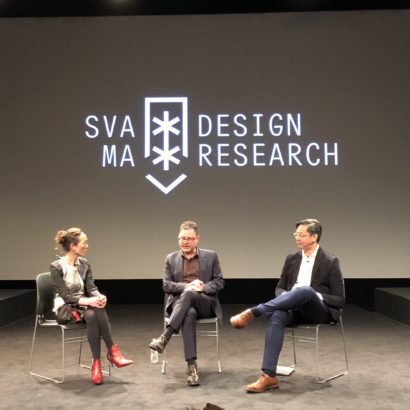
It’s going to be a busy few weeks coming up for me: next Friday morning I’m flying to Boston for an appearance at the annual Society of News Designers conference. I’ll be on stage with New York Times Assistant Managing Editor Tom Bodkin — who is the top dog when it comes to design at The Times.

The joint appearance is being billed as something of a “print versus digital” face-off, but in actuality Tom and I get along very well. He’s a brilliant guy whose seen The Times through more than a handful of major changes over the years, and I’ve learned a tremendous amount from him since I started working there. All the same, he and I have sometimes dramatically divergent approaches to our respective domains, and so our talk should be a lively one — if nothing else, Tom is deeply opinionated about the roles, responsibilities and rights of designers. This is a rare opportunity to see one of the most influential designers in media take me to task for all the compromises we make in the name of Web design. Come watch me sweat.

Unfortunately, I’ll only be in Boston for half a day, as I’m flying to Denver that evening to attend AIGA Next, the organization’s biennial design conference. I’ve been lucky enough to have been asked to give a talk on the main stage which is a very flattering honor. In hopes of living up to the occasion, I’ve been working away on a brand new talk that wraps up much of my current philosophy about design and digital media. It’ll post it here soon after the conference.

Then, later in the month, I’ll be in Philadelphia with the Adaptive Path gang for their MX East conference. On Mon 22 Oct I’ll be giving a talk about my experience at The Times, hopefully offering some valuable insights on building a creative team. It’s going to be fun, but really, this is my chance to see some of the terrific speakers that Peter Merholz and Jesse James Garrett have assembled.

A little further off, in November, I’ll also be running a workshop at Carson Systems’ Future of Web Design conference, making its first appearance in New York City. Back in February, I spoke at Carson’s Future of Web Apps conference in London and had a great time, so this should be at least as fun. Oh, the topic of the workshop is, if you can believe it, grids, though it will be a revised and expanded version of the talks I’ve given earlier in the year.

Continue Reading

+

Radio, Radio

Maybe the rule is that outdated media will skip a technological generation before coming back into vogue. Take radio, for instance, which was ailing for a while under the decades-long, imagistic regime of television. It’s not exactly back at full health, but with the advent of Internet audio, it’s more interesting than it has been in a long, long time.

If you count podcasts as radio, which I do, then you can say that I’m an avid radio consumer. In fact, many of the podcasts to which I subscribe are produced by the various public broadcasters available in the Western world: NPR, obviously, as well as PRI and the BBC too, so long as we’re using broad categorizations here.

Which is why I approached NPR’s new ‘youth-oriented’ program, “The Bryant Park Project,” with some trepidation. Any time a media outlet publicly declares its intention to reach a younger demographic, chances are good that the results will make me cringe. And I’m not even young anymore!

But as it turns out, “The Bryant Park Project,” which debuted on Monday, is not rife with affected jargon, zany sound effects or comedic narrative. To be sure, it’s cheekier than your average NPR show, and it has more than its share of ironic commentary. But it also happens to be substantive and entertaining — like a less stuffy version of “Morning Edition” that, hopefully, isn’t going to spend a lot of time interviewing Bob Dylan about why he’s such a genius. (At least I hope not.) The best thing about it is that it spends zero percent of its time condescending to its listeners. Well, okay, there is a fractional amount of condescension to be heard, true. But there’s far, far less than you’d expect from a program like this. I like it a lot and, more than ever, I’m convinced NPR knows what they’re doing in 21st Century media.

Continue Reading

+

Operation: Bring Nothing to Work

You know those people who show up for work in the morning with nothing with them except, say, a newspaper or a notebook or maybe a jacket slung over their shoulder? They look like free spirits, right? What with their conspicuously absent shoulder bag or briefcase or other such encumbrance — they seem as if nothing holds them down, as if they’re unshackled men and women at one with nature — or with their commutes, anyway

That’s not me. I feel compelled to load up every morning with a bag or briefcase in which I carry a stack of papers, my checkbook, a wallet, a small attaché for credit cards, my New York Times identity card, a point-and-click digital camera, extra pens, my iPod and my iPhone, the latest issue of The New Yorker and my keys. Whew. As much as I would like to do without this uncomfortably extensive inventory of must-have items, I can’t.

Continue Reading

+