Life in a Solid State

The MacBook Air that I bought in late 2009 was never much of a speed demon, but by the end of last year it was operating so slowly that it was nearly unusable. Startup times, application launch times, even accessing open and save dialog boxes all seemed interminable, due mostly to the lamentably poky hard drive that shipped with the laptop.

I finally did something about that earlier this week when I pried open up the laptop casing, removed the hard drive and replaced it with a brand new solid state drive that I ordered from Other World Computing. Even for someone like myself who has very limited experience and comfort with the innards of delicate machinery, the installation process was fairly straightforward, especially with the aid of OWC’s handy installation videos.

Continue Reading

+

Fast Talk

I was fortunate enough to see a really healthy audience turnout last Saturday afternoon at my South by Southwest Interactive 2011 talk, where I spent an hour unpacking many of the ideas in my book “Ordering Disorder: Grid Principles for Web Design.” Thanks a million to everyone who showed up to listen to me talk about what I always thought was a topic of fairly narrow interest. I was incredibly gratified to find out that I was wrong.

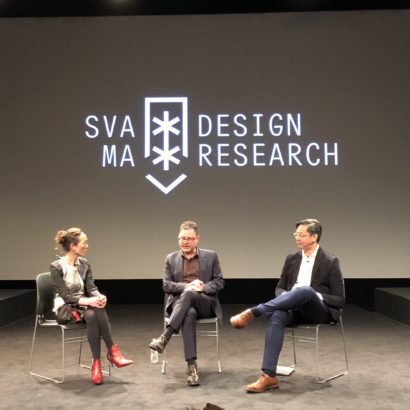
Later that same afternoon I made another appearance at the conference, this time on the Fast Company stage where I was interviewed by my good friend, the design writer Alissa Walker. This was a much smaller venue and not as widely publicized, so only a handful of people got to watch it in person.

Continue Reading

+

SXSW 2011

It’s awesome to be in Austin again for this year’s South by Southwest Interactive festival. I just got in last night (thanks in part to a free ride in from the airport courtesy of the great folks at Food on the Table), registered for my badge and had a quick look around before heading to dinner with friends. Based on that brief scouting alone, this year’s show looks even bigger than ever. It’s going to be crazy here.

You can find me at three events during this yeaṟs festival. On Saturday I’ll be doing a talk at 12:30p about the ideas in my book “Ordering Disorder.” Later than afternoon I’ll be interviewed by Fast Company on the PepsiCo stage. Then on Sunday morning I’ll be doing a book signing at the South by Bookstore in the Austin Convention Center. Come out and say hi!

Continue Reading

+

The “Napoleon Dynamite” Effect

Ratings

2 of 5 stars
What’s this?

Movie site Mubi makes the argument that there is a surprising uniformity to the poster designs for many recent high school comedies and quirky indie films, one that might be traced back to the 2004 quirky indie high school comedy “Napoleon Dynamite”:

“[A] cut-and-paste combination of photographs of actors surrounded by absent-minded doodles (and preferably on a backing of lined or graph paper) has become de rigeur for advertising high school comedies. It’s also become a staple of the quirky urban indie (and occasional doc) where the protagonists are set against whimsically sketched city skylines. And of course hand lettered title treatments are also mandatory…”

I think I was somewhat aware this was the case but seeing all of these collected together brings the trend into sharp relief.

Of course, that’s not to say that this trend is bad. This hand-drawn quality is certainly a step up in imagination from the otherwise dominant trend of floating heads in movie posters.

See more examples and read Mubi’s full write-up at their blog.

+

The Speed of Redesigning

The New York Times MagazineThis past weekend, The New York Times unveiled a new redesign to its Sunday magazine under the sure hand of my former colleague, magazine art director Arem Duplessis, and the magazine’s new editor Hugo Lindgren. The new look of the magazine is heavily influenced by “newspaper and vintage magazine issues from the 50’s, 60’s and 70’s,” what many might call the golden age of publication design. I think it says something about the state of publishing today when even a magazine that is exempt from the metrics of newsstand sales (The Sunday magazine is distributed as an insert to the paper and is thusly not subject to newsstand sales numbers) still feels compelled to recall the glories of an earlier age. Nevertheless, the redesign is stunning work.

Continue Reading

+

Watching Charlie Sheen

All week long I’ve been wondering if it would be completely inappropriate of me to blog about apparently over-the-edge actor Charlie Sheen, but now I think I’ve found an angle that justifies some comment. I demurred several times on publishing this, but ultimately I kept coming back to my draft and re-reading it, so here it is.

I’ve found Sheen’s recent, furious spate of bad boy antics and megalomaniacal television interviews to be fascinating, and it’s not just a fascination borne from schadenfreude, either. Yes, the man is a car wreck that it’s hard to turn away from, but what an interesting car wreck. I have no doubt that there’s something psychologically wrong with him, and a lot of his behavior is plainly abhorrent and inexcusable. But I also happen to believe there’s an element of genius at work here, too, even if it’s inadvertent.

Continue Reading

+

Cover Story

Ratings

2 of 5 stars
What’s this?

At first glance, what interests me the most about Apple’s just-announced iPad 2 is its innovative new “Smart Cover,” which fastens to magnets built into the frame of the new tablet, allowing easy removal. When closed, the cover puts the device to sleep, and when opened and folded back, it forms a triangular base upon which the device can rest. Through and through, this strikes me as a truly clever design, the kind of protective layer that only Apple — and none of the third party case manufacturers vying for this market — can come up with, because they can make all the pieces fit together. It also strikes me as the kind of intelligent engineering that Apple should be coming up with, meaning it corrects the blight on industrial design that was Apple’s old iPad cover, a chintzy, polyurethane rain slicker of a cover; I found it ill-fitting, remarkably un-Apple like in nearly every way. It always seemed to me more like something you’d find sold under a generic or unfamiliar brand name at Staples than something designed in Cupertino. Good riddance.

The new Smart Cover has its own marketing page here, where a video shows it in action.

+

Magculture on iPad Magazines

Ratings

2 of 5 stars
What’s this?

Magazine designer and enthusiast Jeremy Leslie is pessimistic about the iPad’s prospects for reviving the magazine form:

“The main issue is that readers — paying or not — aren’t engaging with overtly magazine-like apps. There’s a simple reason for this: printed magazines work better in every way. They are a simple one-off purchase that can be used (both in a navigating and reading sense) anywhere. They are lightweight, easily shared and disposable. You’ve heard the arguments plenty of times but this first year of apps have done nothing to weaken them. Why would you buy an app when it only repeats the printed magazine?”

Obviously, I agree.

+

A.V. Club: How Long Does It Take to “Get” an Album?

Ratings

3 of 5 stars
What’s this?

Music writer Steven Hyden muses on his experience reviewing Radiohead’s latest album, especially with regard to how long and how often a reviewer should spend with each record. It’s a really thoughtful rumination on how we experience music and how that can make writing about it difficult:

“But the tricky thing about music writing — and part of what makes it the trickiest form of arts writing, in my opinion — is that a good piece of music should elicit varying responses over spans of time and in all sorts of environments. Unlike books, movies, or TV shows, songs are supposed to be experienced many, many times… Music by nature is a slow burn, parsing out its charms in small increments over the course of weeks, years, even decades. Music can be the focus of your attention, but it often fades into the background, only to re-emerge when you least expect it and reveal a whole other dimension. No other art form weaves its way into the fabric of your life like music, and this inevitably shapes our feelings about it.”

Hyden’s point, in part, is that “The King of Limbs” demands at least several listens, but that imperative of sustained experience makes it so subjective to write about — the opinions he formed just before writing his review may not be accurate based on another week or two of listening. And besides, who has the room in their life to spend so much time with an album, anyway? Read his complete, very thoughtful essay here.

For my part I’ve been listening to “The King of Limbs” regularly since its release and have come to the conclusion that it’s not their best work by a long shot. It’s a bit disjointed: the most interesting parts aren’t as good as the best Radiohead, and the most typically Radiohead parts aren’t very interesting.

+